

Share this
by The Notified Team on Nov 4, 2025, 2:08:31 PM
Last week at PRSA ICON, we hosted a full house of communicators eager to tackle a major question:
How can brands stay visible and credible when AI is deciding what gets surfaced?
As search evolves into an answer engine world, we’re no longer optimizing just for Google. We’re optimizing for large language models (LLMs) that summarize, cite and shape how audiences see brands.
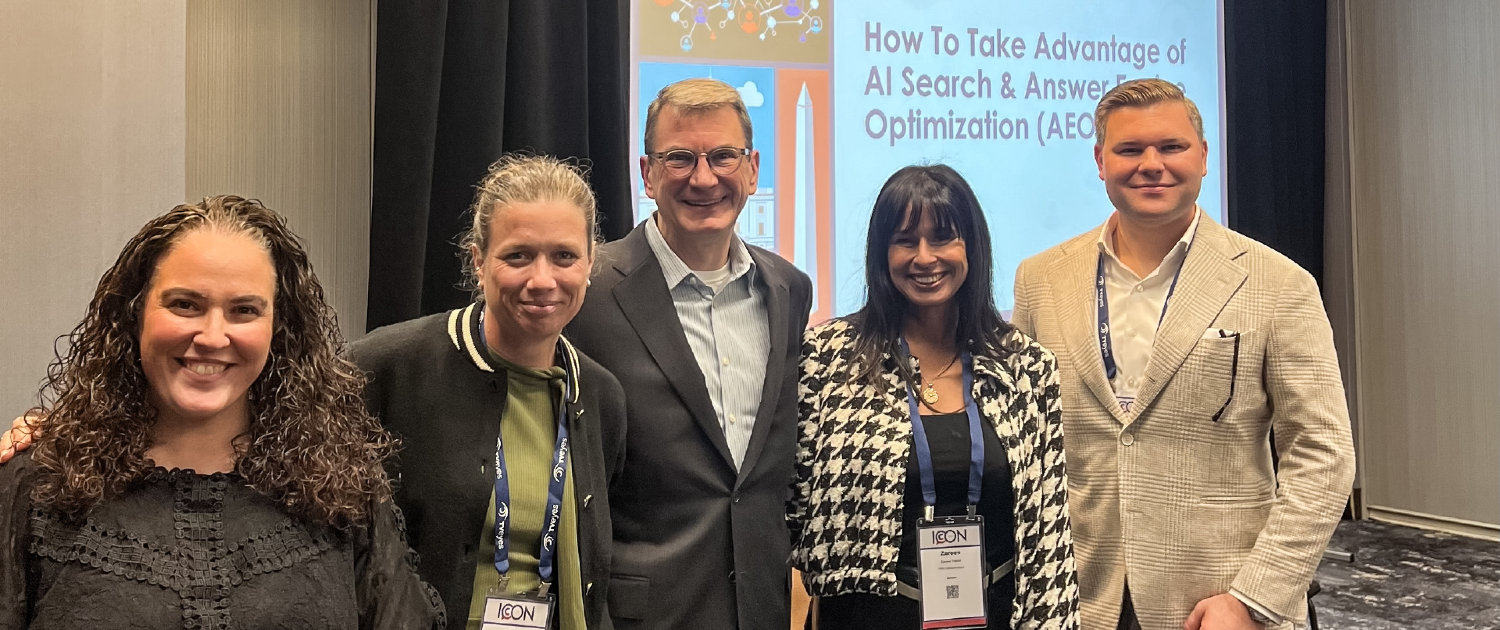
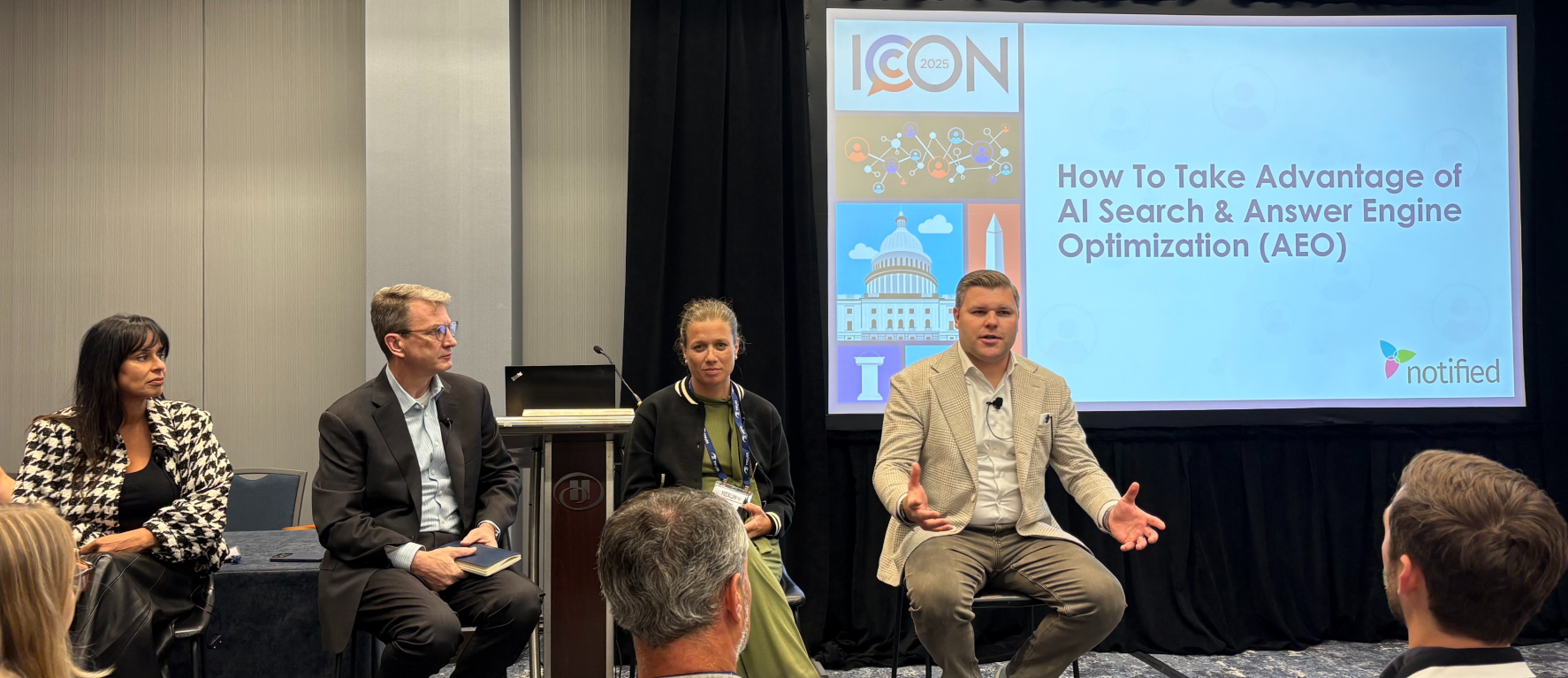
Our CEO, Erik Carlson, joined Zareen Fidlon from PAN, Tom Gavin from Pax8 and Laura Macdonald from Hotwire for an insightful discussion on how PR teams can take the lead in this new era of visibility.
How AI Is Redefining Visibility for PR and Communications
Erik summed up what many of us already see: the rules of visibility have changed. Traditional SEO and media tracking only tell part of the story.
Through our partnership with Profound, we discovered that GlobeNewswire press releases were cited over 13 million times by AI systems in just 30 days. Press releases aren’t just media tools anymore - they’re data sources shaping brand presence in AI answers.
He explained the four key drivers for LLM visibility:
“We’ve identified a framework: Structure, how your content is organized. Originality, whether your content is unique. Authority, which is really another word for trust. Recency, how frequently you distribute content.”
These drivers define how AI understands and cites your content:
- Structure helps AI understand your message clearly.
- Originality shows that your content adds something new and valuable.
- Authority signals that your brand can be trusted.
- Recency keeps your name top of mind by staying active and relevant.
When you bring all four together, you’re not just improving SEO, you’re shaping how AI learns and talks about your brand.
From SEO To AEO: Building True Brand Visibility
Picking up on that theme, Zareen Fidlon reminded us that being visible isn’t enough. Brands need to be understood by AI.
“One of the things we’re asked all the time is, ‘Are we showing up in AI search, and how do we show up in AI search?’ The gap I see is that it’s not about visibility alone, but about having a unified brand footprint across all channels.”
She explained that answer engine optimization (AEO) is a strategic shift, not a technical one. Your earned, owned and paid content must work together, sending consistent brand signals that teach AI who you are.
That consistency is what drives brand discoverability, helping ensure that AI interprets your story the right way across every platform.
Citations Are the New Clicks: Measuring ROI in the AI Era
Tom Gavin reframed ROI for the AI era.
“If it's not measured, it's not funded. It's not about chasing clicks anymore, it's about chasing citations. From a communications and marketing standpoint, finding ways to drive originality and tell a consistent story across press releases, blogs and social is critical.”
Instead of tracking traffic or impressions, PR pros now need to track citations, how often and where AI models reference your brand.
Citations are the new measure of trust, showing your content isn’t just visible but credible and influential.
Creating Content That Speaks To Humans and AI
Laura Macdonald reminded us that great writing still wins, for both people and algorithms.
“AI favors clear signposting, short paragraphs, FAQs that answer real questions, an authoritative tone, and recency. It's not about posting one press release everywhere but adapting your message across formats so your content becomes more citable for multiple sources.”
Her advice is simple and actionable. Write clearly. Refresh your content often. Repurpose your stories across channels in ways that make sense for each audience.
Think beyond the single press release. A strong communications strategy builds layers, a release on the wire, a blog post, a FAQ and a social narrative that reinforce the same core story.
When your content is structured, consistent and distributed across multiple sources, it becomes easier for AI to understand, cite and amplify your message.
Why PR Pros Are Built To Lead in the AI Era
PR professionals already excel at clarity, trust and storytelling - the qualities that matter most in AI discoverability.
Now is the time to lead. Break down silos between PR, marketing and tech. Align your messaging. Treat content as something both humans and algorithms interpret.
The fundamentals of communication haven’t changed; the audience has.
The Future of Visibility Is Human + AI
AI isn’t replacing communicators. It’s challenging us to evolve.
Your visibility now depends on structure, originality, authority and recency and on how well you connect the dots between data, creativity and trust.
At Notified, we believe PR pros are ready to lead this transformation. Because when the front door to the internet changes, it’s the storytellers who know how to walk through first.

The Notified x Profound Partnership
See how GlobeNewswire press releases are cited by chatbots, answer engines and AI search summaries.
PRSA ICON 2025 Panel Transcript: How To Take Advantage of AI Search and Answer Engine Optimization (AEO)
Erik Carlson, Notified: By way of introduction, I'm Erik Carlson, CEO of Notified. For those who aren’t familiar, we are the only integrated IR and PR technology providers for corporate storytellers in the market. You may recognize Notified through GlobeNewswire, which is one of the three major newswire distribution services in the market. I’m a little bit biased, but I think it’s the most advanced and the best.
This is a topic that I’m incredibly passionate about as an innovator and technologist in space, and also as someone who supports the corporate storyteller and is married to someone in PR. I’ve spent the last three to six months really digging into this topic personally. What struck me as interesting as I’ve talked to clients, prospects, others in the industry, and of course my wife, is that it’s probably never been more difficult to be a corporate storyteller or communicator.
This is not something new, and everyone in the audience knows this, but we’re sitting at the intersection of several different trends, the most recent being the shift to AEO. If we go back a couple of years, the big discussion was around the rise of generative AI content. That was the topic in 2023 and 2024. Now we’ve crossed a new chasm in terms of trust in media. There’s less trust in what people read than ever before. People now trust what they read less than what they see in print, which is a scary proposition.
The combination of those two things, creating more content in the ecosystem and more noise around how to tell a trusted and authentic story is made even more complicated by the fact that the scoreboard is changing. It used to be that many people in this room measured ROI or attempted to measure ROI by earned media placements or traditional views. That’s all changing with the shift from traditional search to AEO, and that’s really what we’re going to talk about today.
We saw this trend coming about six months ago, and I think we were the first to market to partner with a provider called Profound. Some of you may be familiar with it. If not, it’s a leading brand narrative and brand perception platform for assessing AI citations and AI visibility. We partnered with Profound because we saw that the scoreboard is changing.
In just a very short period of time, over the last 30 days following our partnership with Profound, we saw something incredible, which we’ll get into more during this session. GlobeNewswire press releases as one source and we’re talking about this because we own the data were cited over 13 million times by AI answer engines. That means a press release, something many of us might view as a “check-the-box” document or something relatively simple for a PR campaign, has real impact and real opportunity to shape your brand narrative, your brand visibility, and your corporate story.
That’s a bit of a teaser of what’s to come in the session, the fact that PR has a major role to play, and that traditional tactics that used to work when we were talking about SEO or shifting toward social are changing again. The fact of the matter is that the front door of the internet is changing.
If we go back to 1990, for example, you went to the library if you wanted to read or research something. In 1998, Google came along, and instead of going to the library, you searched from your desktop at home. Suddenly, all that content was easily accessed and understood. Now we’re shifting again, to not even viewing or researching the content, but simply asking a question. And instead of going to the library, we now have an agent or “librarian” serving us the answer.
For PR professionals, figuring out how to optimize your programs and communications for that shift is more important than ever.
I’m going to turn it over to Katie Creaser, who I’m thrilled to have with us here today moderating our session. I’ve had the pleasure of working with Katie for a number of years. She is Managing Director of Technology PR at ICR, and one of the best in the industry that I’ve come across. And I think that’s earned media, not paid.
Katie Creaser, ICR: I'm going to count that as earned media. Thank you, everyone. Thank you, Erik, and thank you to our panelists. I’m so excited to moderate this panel. I want to start with a few questions for the room, and then I’ll introduce our panelists.
My first question is: in the last 48 hours, how many of you have opened up an LLM, Claude, or ChatGPT and asked it a question?
Zareen Fidlon, PAN: Same.
Katie Creaser, ICR: Same. Like 100 times. And how many of you stop scrolling in Google once you’ve taken in the answer that AI has served you and don’t scroll further? A few less, but still a significant amount.
And how many of you, this is probably the obvious one here because you’re thinking about how AEO is going to impact the brand or organization you work for?
So, I have a promise to make. By the end of this hour, you’re going to know what AEO is, understand why it matters, and have some immediate actions you can take on behalf of the brands and organizations you work with.
The shift is happening right now. As Erik mentioned, we’re moving from traditional clicks to AI-generated answers, and the stakes are high. Your press releases, the earned media you’re securing, and your social presences are training AI. We need to understand how to manage that, how to report on it, how to handle reputation, and the role it plays in a crisis. There’s a lot to consider, and we’re still in the early stages of this.
I think we’re all here today because we have a lot to learn. With that, I’m thrilled to introduce our expert panel. I’ll introduce them to you, and then I’ll ask each person to give a quick intro.
We’ll start with Zareen Fidlon, Senior Vice President and Head of AI Innovation and Integrated Marketing at PAN. Zareen, I’ll let you introduce yourself.
Zareen Fidlon, PAN: Hi. In this case, I’m Head of AI Innovation and Integrated Marketing at PAN. I head up AI Innovation and Integrated Marketing at PAN. What that means is I look across brands, demand, and data to connect those for growth for our B2B clients. Lately, that’s meant focusing on how AI is shifting the landscape for digital discoverability and how our brands are showing up there.
Katie Creaser, ICR: Thank you. We're sharing the mic here. Thank you. All right, next up, we’ve got Tom Gavin, who is the Chief Marketing and Communications Officer at Pax8.
Tom Gavin, Pax8: Thanks, Katie. Kristen, can you hear me? It’s good to have friends in the back. Oh. Maybe not. Let’s just do this. May I?
Zareen Fidlon, PAN: Yes, of course.
Tom Gavin, Pax8: We’re just going to pass the hat all day. First of all, thank you all for being here. I think it’s a testament to the changing landscape we all work in, the anxiety we all feel, and the opportunity we all have.
My name is Tom Gavin. As Katie said, I lead Communications and Marketing at Pax8. We’re a technology company that helps connect small businesses with technology solutions. For us, we’re a small shop ourselves, and what we really see with AEO is an opportunity to raise our game by raising our voices in a whole new way. It’s no longer about how loud you can scream, as it was for a long time with the traditional web. It’s about how consistent you can be.
As we go through this, the curiosity I have is how much has changed, but also how much has stayed the same. Those core principles on which we built storytelling and communication are still absolutely essential today.
Katie Creaser, ICR: Why don’t you pass it to Laura? I’m from Long Island, so I’m very loud. Can you hear me in the back? Good? Great. Next up, I’ll introduce Laura Macdonald, Chief Growth Officer at Hotwire.
Laura Macdonald, Hotwire: Hi, everyone. So, Hotwire is two companies now, if people don’t catch that. We’ve got Hotwire, which is the communications agency, and obviously has a vested interest in AEO from both an earned media and paid media perspective.
What really got us focused on this is ROI.DNA, which is our performance marketing and SEO arm. SEO in particular is facing an existential crisis when it comes to AIO or GEO, as we tend to call it. All of our SEO programs now include GEO, and it’s been really interesting to see how this will impact on our industry.
We work primarily with technology clients who like to talk about AI, and they really need to be on the cutting edge themselves. We hear from a lot of clients that they want to be AI-first in their marketing and communications efforts. They don’t often know what that means, but they look to us for guidance.
That’s why we launched our AI Lab back in January, to build some competing products to Profound, but also to partner with great companies like Notified to ensure everything we’re doing integrates AI at its core.
Katie Creaser, ICR: Thank you. So, let's get started. I want to get a 30-second hot take from each of our panelists here, and I want to hear about how AI-mediated discovery is changing the game. You talked a little bit about it in your intros, but just quick reactions. What was the aha moment been for you with this shift? And Erik and Laura, if you wouldn’t mind passing, let’s start with you.
Erik Carlson, Notified: Yeah, happy to. Thirty seconds, I think. First, you’ve got to get comfortable with the uncomfortable. We’re doing things from a strategy perspective in marketing and communications that we haven’t done before, and they’re yielding results in terms of visibility. You also have to be curious. The journey for me actually started with me calling up my CMO on a Saturday morning and saying, “Why aren’t we showing up when I Google or actually search,” and see, I have to change the vernacular, I’m still stuck in that. “But when I search in ChatGPT or any LLM, who is the best press release provider for visibility?”
So really starting to decode that, peel back the layers of the onion, understand what ROI means, and knowing that it’s not those traditional metrics that I mentioned. It’s now skewing toward things like citations. All of that really matters. I think it starts with being curious about how you optimize your story and make sure your brand has visibility in the marketplace.
Tom Gavin, Pax8: You stole a lot of what I was going to say.
Laura Macdonald, Hotwire: I’ll just share an anecdote. We have a tool similar to Profound that we launched, and we have been running it on a few clients. One of our clients asked a similar question: “Why is all this old information about me coming up? Why are people talking about things from three years ago?”
We ran it through the tool and discovered there were some pages on their website that they thought had been taken down. The person who was supposed to remove them had left the company. They were delinked but never actually deleted, and the AI answer engines were citing those pages. That, to me, was such a quick and easy fix.
So being curious, making that discovery, doing those audits, don’t be afraid of it, because sometimes it’s a simple fix, and other times it’s more complex. The other thing is to keep doing it, because the LLMs themselves are changing. We were talking about it earlier: GPT-5 came out, and you’re like, “Now everything’s hallucinating again. What’s going on?” That’s because of the models. You can’t stop. You’ve got to keep being curious, because everything’s changing really quickly.
Tom Gavin, Pax8: Yeah, I think tied to that, it’s about being curious and realizing that all of our teams, whether you’re in-house, at an agency, a digital-first person, or a pen-and-paper-first person, we’re shifting from trying to generate traffic to really trying to generate trust.
At the heart of it, whether we like it or not, trust is becoming, if it’s not already, the number one commodity that all of us share. It’s going to take a long time to figure it out. Erik said he’s been looking at this for six months; he’s ahead of the curve, in truth. This is changing so fast, but that principle of trust is going to be the mainstay.
Zareen Fidlon, PAN: For me, I think it’s a shift from visibility. When we look at AEO, everyone thinks of visibility first, but it really needs to move to understandability, because the LLMs need to understand your brand. The AI is now a filter between your brand and your audience. It’s deciding what’s surfaced, summarized, and cited. So, in order to speak to that, we as storytellers need to shift to teaching the LLMs the right signals and the right structure so that our story is raising the way it needs to be, in an accurate format.
Katie Creaser, ICR: So, Erik, when you opened up, you mentioned the partnership with Profound. I want to dig into that a little bit more. Can you talk about the partnership, why Profound, and some of the initial data that you’re seeing?
Erik Carlson, Notified: Yeah, absolutely. Again, it kind of starts with this curiosity journey. We publish newswire analytics for any of our press releases. Many of you have sent press releases, looked at them in the first 24 to 48 hours, and then moved on. The reality is, if you look at web traffic because of the shift to AEO and major digital properties, it’s down dramatically over the last year.
If you’re a publisher or a journalist, especially if you’re tracking ad revenue, you’re seeing that trend. You can look at bellwether digital properties like the Financial Times and the Wall Street Journal, all of which have seen declines, somewhere from double digits to nearly 75% because people are getting their answers from answer engines instead of clicking through those sites.
So, if that’s the case, the traditional metrics that we would score, visibility and placements, aren’t necessarily the metrics moving forward. As we saw visibility go down for press releases, I asked, where’s the traffic going and how do we prove it? Cue the partnership with Profound. They are the leader in brand visibility for AI search, and what they’re doing is essentially crawling server logs.
We partner with our CDN provider, a very technical term “Akamai” to make sure that bot traffic coming in to look at our press releases is visible and can be indexed. We’re aggregating all of that citation data. Citation is a fancy way of saying that a source was cited to drive an answer in an LLM. We’re aggregating that data and producing reports around it.
That’s where the 13 million citations we’ve seen in the last 30 days come from. As we continue to peel back the layers of that data, we’ve learned that much of what gets cited and sourced is actually controllable. It’s in your control. It’s based on things we’ve all been doing, the way we generate content, build stories, and tell narratives consistently over time.
We’ve identified a framework of four key drivers for LLMs. The first is structure - how your content is organized. The second is authority, which is really another word for trust. The third is recency - how frequently you distribute content. And finally, originality - whether your content is unique or duplicated elsewhere. These are all important factors in understanding why press releases and other content pieces are serving up so many citations within AI search.
Katie Creaser, ICR: I think that’s really interesting, Erik, because you have to think beyond one channel, which we do all the time as communicators, but there are so many other levers that can be pulled when it comes to managing how we show up in AI search. That leads me to think about storytelling,
Tom. You’ve led communications at the White House, at Salesforce, at Workato, and now at Pax8. These are very different institutions, to say the least, with different approaches to storytelling. I’d love to get your thoughts on how narrative control works when AI becomes the intermediary for your story.
Tom Gavin, Pax8: All those places you listed, they were all big and influential, in different ways. But the one consistency across all of them is that every time you’re trying to land a story, you’re thinking, “Who’s the editor I need to get to? Who’s the reporter I need to reach?” You want an organization that has message discipline, narrative control, and consistency across all your storytellers. But you’re always trying to influence that editor or that reporter.
AI is now the biggest, most influential editor all of us have. And we’ve all got to do, those four quadrants, I think, are great, Erik, that’s how we’re going to reach that editor. That’s how we make sure that editor understands our story and can repeat it time and time again. Because unlike any other outlet, that AI editor will have a greater reach than any one publication.
So, I think the lesson from all those different stops on my journey has been to focus on consistency and the power of storytelling with a point. But now it’s also a point that needs dual visibility. You still want to get to the people who are reading you, the reporters who are writing about you, but you’ve also got to figure out how to reach that machine-focused editor. You’ve got to have that duality in how you approach your communications and positioning.
Katie Creaser, ICR: So, what you’re saying is the fundamentals of how we’ve always worked, the fundamentals of messaging consistency, of getting a story in the market and getting it right remains.
Tom Gavin, Pax8: Because it’s evident in a hallucination. You have one reporter, or one person in your shop, who puts something out on social or the blog that’s off message, even just a little bit, that becomes the foundation of some of the decisions influencing those LLMs and how your brand shows up. More than ever before, fundamental narrative control, message discipline, and consistency are essential.
Katie Creaser, ICR: Yeah. And Zareen, agencies are now being asked by all their clients and internally by the C-suite to execute this strategy. So, I want to know what clients are actually asking you to do when it comes to AEO. And what’s the gap between what we think we need and what we actually need when it comes to immediately taking action on this?
Zareen Fidlon, PAN: One of the things we’re asked all the time is, are we showing up in AI search, and how do we show up in AI search? A lot of clients expect us to come up with a solution like an SEO fix or technical optimization. But really, it’s not a point solution. It’s more of a discoverability strategy that connects all of your PESO channels. Across that ecosystem, you want a strong, cohesive brand narrative to connect everything. The gap I see is that it’s not about visibility alone but about having that unified brand footprint across all channels.
Katie Creaser, ICR: And Laura, from Hotwire’s vantage point, you’re working with global tech brands. Many of those brands are sophisticated and are taking what you called an AI-first strategy though we’re all still trying to define exactly what that means. Are you finding that even the more advanced players are grappling with this and trying to find their way?
Laura Macdonald, Hotwire: Yes, is the short answer. There was a question in the earlier Q&A that touched on this too. Everything is changing so rapidly right now. AI itself is always learning, so even within the same model, it’s going to give you a different answer tomorrow than it did yesterday. That’s hard for many of us in communications, because we tend to be control freaks. We like to know what’s happening.
On top of that, every model is different. You’ve got to optimize for Gemini, for Claude, they all show results differently. There’s complexity. You can pull from multiple models, and new versions keep coming out. So, what our clients are really grappling with is, “I’m lacking control. How do I get that control back?”
For us, it’s about education and helping them understand discoverability, how you’re showing up, what you can do to influence that, and how to measure and prove impact. Because once you start, it really does make a massive difference.
Katie Creaser, ICR: So, I want to double-click on that and talk more tactically. How are you helping folks think about AEO differently than they think about SEO? They feel similar, but there is a difference. What is the framework and foundation for the work Hotwire is doing?
Laura Macdonald, Hotwire: The framework is actually very similar to what we’ve used across SEO and earned media. We talk about it in four main pillars of an AEO or GEO strategy.
The first is the technical base. We’ve touched on this before. I don’t know how many of you in comms have a close relationship with your IT or webmaster team, but they could be blocking AI crawlers. You should check whether your website is being blocked. We were joking about this before—at another conference, a big MarTech vendor wasn’t showing up at all for its branded keywords. We found out their IT team had blocked all AI crawlers, so their content wasn’t visible to AI at all. So make sure the technical setup is right.
Next is the audit or discovery piece. How are you showing up today? Keep measuring that. You’ll appear differently in ChatGPT, Claude, AI Overviews, and even in new AI browsers. Be prepared for constant change. You can’t just audit once and recheck in six months. You need to monitor it regularly.
Also, be conscious of your audience. With semantic search, different audiences are shown different content. Understanding who you’re trying to reach makes a big difference.
Then comes content optimization, which we’ll discuss more later, and authority optimization, where comms plays a huge role. Showing up in third-party trusted sources matters. AI heavily leans on earned media and established publications. Understand which ones are most impactful for you, and make sure your stories and messages are consistent across earned, paid, and sponsored content.
So those four pillars - technical, discovery, content, and authority make up the foundation of an effective AEO strategy.
Katie Creaser, ICR: Let's talk about the content for a moment. When we've been reading about AEO, and I’m sure you’ve seen it too, we see that earned media plays a huge role here. But when I look at those primary sources, your Associated Press and Reuters, those are major wins for all of us. They’re incredibly hard to get into on a consistent basis, where we have full control over the messaging and are getting coverage every single day.
I want to talk about content because I think it helps democratize this a bit for all of us in the room. So, Zareen, I’ll turn to you. You’ve talked about brand to demand. Can you tell me more about the key components of content, earned media, and social signals, and how that applies and again, democratize? We’ve all talked about content and how every single person in this room has a say, whether you’re in Reuters every day or not, in how your brand shows up.
Zareen Fidlon, PAN: It goes back to what Laura was saying. You have to look across structures. Is your content structured the right way? Is it answering the questions that AI is being asked? It needs to do that in a way that’s clear and crisp so AI can understand it. You want to make sure it’s written for that purpose and that the structure is there.
Then there are the technical aspects of content that need to be in place for your website. Once all of that is right, you look at the signals it’s sending. Are your owned and earned channels sending out the right signals to show authority to the LLMs so that you’re resurfaced? Then there’s the amplification piece looking at your paid and social channels and ensuring they’re amplifying your content in the right ways so that LLMs pick up on it and see it as authoritative.
Those three things really matter. When they work together, that’s when understanding happens for the LLMs. When that understanding happens, it leads to discoverability and that leads to demand.
Katie Creaser, ICR: And Tom, on the brand side, when you’re building that integrated strategy Zareen just described, and Laura alluded to earlier, what’s the internal reality for this right now? For those in the room who need to bring people to the table to start creating a strategy and make progress here, who needs to be part of that conversation?
Tom Gavin, Pax8: If there’s a communicator in the room who can go deep on multi-tenant metadata, congratulations, you’re out of the game. You need people who speak that language. You need your CIO, your support teams, your product people. You need more than just the regular “talk to the person who built the product.” It’s not just about the product anymore.
It’s about the deeper schema, the right tagging, and the right infrastructure behind your message. It’s one thing to write a press release or say you’ll optimize keywords and SEO. This is a completely different world. It takes many more people at the table to figure it out from a brand perspective, and then from a day-to-day communications perspective, to get it right.
Katie Creaser, ICR: Yeah. So, Erik, beyond just having the win of a citation, because you want to make sure, you’re being cited and showing up where you need to. Tom talked earlier about trust. How can brands ensure they’re being portrayed as credible and authoritative when it comes to AI responses? And what signals do these engines look for when figuring out what sources to trust?
Erik Carlson, Notified: Whether you use the term trust or authority, there is a preference. What should be encouraging for all the communicators here is that preference skews toward owned and earned content, which is this room’s bread and butter.
We talked about what you have to do to make sure your owned content is being surfaced. To get a bit technical, there’s something called a Moz Domain Authority Score. It’s a fancy way of saying, “Is this website a trusted source or not?” That score significantly affects how frequently and how highly ranked your content or your site’s content, or a third-party site’s content is in terms of LLM preference.
As an example, and one reason newswires score high, is that most have domain authority scores of 91 or 92 out of 100. Thomson Reuters or The Wall Street Journal might be 93 or 94. So you can sort of shortcut when you can’t get coverage in those banner digital properties by using a site with a high domain authority score.
You can also take a different approach and play to the long tail. You used a term I loved, democratization. When’s the last time anybody did a Google search and looked at the second page? Honestly, I probably haven’t in ten years. The reality is that content matters.
We talked about controlling the narrative, and I love that you made that point. You have to look far and wide. In traditional SEO, if something showed up on the second page of Google, you could ignore it because it didn’t have influence. That’s not necessarily true anymore. It’s about consistency of messages, making sure that for what you can control - owned channels, the newswire, editorial coverage that’s earned, whether long tail or banner properties, you stay focused on clarity and consistency of message. And then, really, on frequency and recency too.
Tom Gavin, Pax8: You talked about it in your, I'm sorry in your four square, originality was one of the four. How does that play in?
Erik Carlson, Notified: Yeah. So, if you really think about how LLMs are working, they’re sorting or looking for a source of data. If they’re getting baseline data to answer a question, it may not be the highest domain authority, but if it was the first, there’s a preference toward that. So, if you land great earned media but there’s already a source out there for the content the LLM is surfacing, you may not actually influence the LLM with that earned media.
You really have to think about it the same way we always have with earned media, be intentional about where that information lives, where it’s sourced, and who breaks that story first. That will have a disproportionate impact on making sure it’s seen as a highly authoritative channel. If it’s not original content, it probably won’t get traction.
Katie Creaser, ICR: It’s so interesting to me and very exciting especially on the agency side, because I have this feeling that there are so many things I can touch, control, and be part of. It can even elevate my role in the work I do for clients.
I also feel like what’s old is new again. We all heard years ago, “The press release is dead.” The press release is back. I’ve declared it, it’s back. You should be wiring them. It’s critical to do that. Some of these tactics we may have moved away from this idea of “what’s old is new” should be part of the mentality we bring into this.
And now, let’s get dark, Tom. What are the things that, speaking from the agency side, I always want to know what my clients are thinking, what keeps you up at night when you think about this topic? What do you worry about?
Tom Gavin, Pax8: Yes.
Katie Creaser, ICR: It just keeps you up at night.
Tom Gavin, Pax8: No, it really does. My team in the back will understand this, they’ve heard me say it a hundred million times, and I’ve only worked with them for a few weeks. Message control and consistency are imperative to all of our organizations. It’s the one thing you think you can control and the one thing you know you can’t, try as you might.
The thing that keeps me up, Katie, is that anxiety. We have a great Chief Trust Officer, not to pick on him, but he’ll sometimes say things on social that we may not want him to say. It’s not quite off brand, but it skews things just a little bit, and that makes me anxious.
There are things we should be able to better control, and then there are things we can’t. We talked earlier, while waiting for everyone to join, about what to do about Reddit, what to do about this or that. Those are things we can’t control directly, but they still keep me up at night.
From an in-house perspective, part of the challenge is making sure that everything we’re doing for the people who are on Reddit, so we can influence them that way is the best it can be. Better customer service, better engagement, better communication, better everything. Better, better, never best.
So those are the two things: consistency, and the voices in our ecosystem that we can influence but can’t control, we can only hope to.
Katie Creaser, ICR: Laura, I want to talk about creating. We talked to you about content earlier, and I write press releases, I write blog posts, I pitch the media. How should I be adapting to the way I write and create content to make sure that it's getting picked up? What is the practical content checklist? And Eric, I'm sure you have some things to say about this as well.
Laura Macdonald, Hotwire: Yeah, I think we've covered a lot of those topics today, but we have now what we call an AI citability score that we run for clients. We can take a piece of content, whether it's written by humans or indeed written by anybody, the robots, and can tell you if that’s going to have a really good chance of being cited based on how it's structured and what content is in there.
So, we've touched on a lot of them: the structure and the clarity. AI really likes clear signposting, short, concise paragraphs, a top line or headline that says what the paragraph is going to be about, then you go on and write it. Similarly, FAQs. We know there are answer engines. So, if you can write, based on your discovery, what questions most people are asking that surface your content, writing in FAQs helps. That doesn’t have to be in the press release, but it could be a blog post that goes into detail, takes those topics, those questions most asked, and writes out the answers.
Again, this isn’t anything new. Good writers have always been thinking, what’s that sound bite, what’s that stuff? They really do like taking those sound bites. And then that authoritative tone, having a consistent tone through your content, is again really important. These are things you know from a writing perspective.
And then I think we’ve touched on this one a little bit, but it’s important: sort of meta tagging, for want of a better word. They’re not meta tags anymore, they don’t exist, but it’s that kind of signposting that this is a person of authority who’s writing about it. So, who’s the person? What’s their title? Making sure that’s citing. If you’re citing content, you’re linking out to other places, actually citing those sources because again, they like to reason that.
And then recency. How many of us - yes, press releases have dates on them, but how many pieces of content on our websites don’t have a date? Recency is really important. Refreshing the content, saying “on this date,” because they have a preference for newer content. You can game that system by using blog posts and recent examples, and refreshing old content that way as well.
So, we put all those in together. We can give you an AI citability score and recommendations for how to improve it. And the nice thing is, it’s not necessarily just one piece of content. We would never suggest that the press release is what you post to your website, put on the wire, and send to a media outlet anymore. It has to look and feel really different. A reporter is going to get something very different from what you might want to put on your blog post or your product page. Message consistency, absolutely, but think about how you change those formats to make them more citable.
Because the other thing is, if you’ve ever asked a question to ChatGPT, it’s not citing from just one source. It’s citing from multiple sources. So again, how do you game that system by getting that earned media article, putting it on a newswire, having a blog post, having an FAQ page, so it can cite from multiple sources? It’s all content you’ve at least had a hand in, even if you can’t 100% control all of it.
Katie Creaser, ICR: But if I can’t measure it, moving into ROI, everyone’s favorite topic, how do we know it worked? I want to start with Eric, and then I’m going to ask Zareen. ROI is everything. If I can’t prove that I did it, did I even do it? How are you thinking about, what AEO’s success looks like? What metrics should communicators be looking at that they may not be tracking right now? And what are the KPIs for the answer economy?
Erik Carlson, Notified: So, I think, first of all, we’re not throwing away traditional PR metrics. It’s yes, and when we talk about AEO, let’s all keep in mind that it represents less than 5% of organic searches today. That doesn’t mean it’s not growing tremendously. That doesn’t mean it might not represent 80% tomorrow. But I don’t want anyone walking away from this session saying we’re throwing out everything that we did. There’s this new fad. That would be a mistake because so much of the foundational work we’re doing supports AEO.
We even talked about structure and recency. I loved what you mentioned because it’s both visible and invisible. The press release, as an example, or your content for another audience now and it’s the LLM. That language isn’t French or German, it’s actually JSON-LD tags, which is the technical metadata you’re talking about. And it’s so critically important, because if you get those two foundational things right, you’ll disproportionately skew the number of citations.
We did a case study, and I’d invite anyone over to the booth to look at some of the detail we unearthed looking through 70,000 press releases over the last 30 days. What’s fascinating is, when you talk about democratization, you can take a B2B unknown brand in the lithium-ion space and compare it to a peer, and then compare it to a well-known B2C big-box retailer that I’m sure everyone would recognize, with a market cap 10 times the size and a social media following 100,000 times the size.
The reality is, when you look and score those press releases as content for the same type of earnings, fourth quarter or full year earnings releases in the same week, the disproportionate weighting in terms of citations or times your brand is showing up is skewed based on structure. So, we looked at a structure rubric, both for visible and invisible.
The reality is that unknown B2B lithium-ion provider got three and a half times the number of citations as that big-box retailer, and that big-box retailer was Costco. That should surprise everyone in the room because that’s a well-known brand. But the reality is you’re tailoring for a brand-new audience. You’re essentially translating your content for another content stream. That’s really how you have to start thinking about and measuring ROI. It’s not just traditional, for the normal human audience you’re trying to reach, but also how often you’re being surfaced. And then, as you look at the types of answers that are coming up, is it actually representative of that narrative control comment you mentioned?
Katie Creaser, ICR: I get excited because it levels the playing field. It makes it so that we can all have more impact than we ever thought we could have, which is really exciting and an opportunity for everyone here. Tom, I'm asking you all the hard questions. We got dark, and now I'm going to ask you about budget. So, we're all allocating budget for 2026 right now, and every in-house team has competing priorities. How are you making the case for the investment, and how are you prioritizing and getting buy-in from the C-suite?
Tom Gavin, Pax8: It's a couple of folds, right? And I think it gets to a point that Eric was just making. With our CFO, if it's not measured, it's not funded. And so finding a way to take these citations as measurement helps us go from CF No to CF go faster. And I think that's something we've all got to put in our heads because it is the easiest thing to say, oh, we got X number of clicks. It's not about chasing the clicks anymore. It's about chasing the citations. And that's how I'm going to get my CFO, because he believes in ROI. And he believes in it like the Pope believes in God. And so finding a way to move that forward from a communications and marketing perspective is absolutely central. It's also one of those things where I don't know what I don't know from a budget perspective. I don't know what this is going to cost me from a newswire perspective or a change in infrastructure, but I do know from where I put my team's time and effort budget, finding ways to drive that originality and to do press releases in a different way, a press release and blog post and social and, and, and consistently all the way through, telling that same story through five or six or seven different viewpoints is going to be absolutely critical from a time budget, not a money budget.
Laura Macdonald, Hotwire: Just to jump in actually, one of the other things we’ve found really effective when talking to that CFO audience again, if you're discovering what are the most authoritative media outlets for you, for the audience that you're trying to reach, it's not that sort of we go everywhere. You can do much more targeted on the paid side, sponsored content, which actually means that you can be spending less money for more impact. So, we had it with one client. We did this, we spent 8% less on paid media, but they saw significant volumes of organic traffic. So, there are some traffic metrics: they rose up to number two in the rankings compared to competitors for certain keywords. And so, the CFO is like, well, you spent less money and you got better results? Let me give you more money. So, there are ways that you can say, look, hey, we took that paid media budget, we redirected it, we spent less, and we got all of these results as well. So, thinking about how you frame it in different ways can be really important to getting more funding in the future.
Katie Creaser, ICR: Well, I want to leave some time for questions. But Zareen, I want to hear, we’ve talked about bringing everyone to the table here. So, bringing all of these stakeholders together, making sure that everyone has a voice. What is an integration mistake that you see when folks are bringing everyone into the room and getting ready to put this strategy into play? What are some of the pitfalls?
Zareen Fidlon, PAN: It's exactly that, I think. It's the fact that when people silo AEO and it becomes a tactic over here or just for one team, that’s when we really see it fall apart. We talked a lot about cohesion, and cohesion and consistency offer that clarity and understanding to the LLMs. When that's there, that's when we're going to drive discoverability. So, I think you have to make sure that everything is aligned, and you're telling a strong narrative that's authoritative and selling across every channel and everything you're putting out there.
Katie Creaser, ICR: And we've dealt with silos forever in communications, so this is a battle cry for us to get on the same page. And I even think, Eric, about doing a technology audit and figuring out, are you using tools internally that are giving you a full picture of how your brand is showing up? Are you media monitoring in one place? Are you sharing intelligence? Are you looking at analytics? Are you auditing that tech stack and working to break down the silos that occur in every organization between PR and marketing and sales so that we can tell that consistent story? All right, everybody, you might have questions, and we're going to have answers. Before we do that - 30 seconds. What's coming next in the next 12 to 18 months? Eric, we're going to start with you. Lightning round.
Erik Carlson, Notified: I think a major tug of war between people in this room and the marketing department, take the lead, right? This is an opportunity, I love how Tom framed it, to demonstrate ROI and move or shift budget away from marketing to a function that often, as a former CFO, I have some authority on this, is underfunded relative to the rest of the marketing environment. So, I think that’s what everybody should be doing, walking away from the room saying, I have the opportunity to be curious, to be an expert or a self-created expert, and to lead this journey in one that certainly involves many stakeholders at the table.
Laura Macdonald, Hotwire: I can jump in. I think shopping is going to be completely transformed. Not sure if anyone saw Best Interest, we work with Sam’s Club and My Walmart. They’re now partnered with ChatGPT. You can be like, I want something for dinner tonight. Oh, that taco recipe sounds great. It will automatically integrate, put those groceries in your cart, and deliver them to your house. So that’s coming for all types of consumer experiences. Really think about that, because it’s going to completely transform the customer journey. Again, the brand job that brand trust that you’re going to have, is going to be incredibly important. So don’t sleep on what’s happening with transforming how people are going to be purchasing. They’re not going to shop for products anymore, they’re going to shop for experiences, and you need to be there.
Tom Gavin, Pax8: For me, I think small is the new big in 12 months. The next big enterprise logo isn’t going to be a big enterprise logo. It’s going to be a shop that is five to six people and able to amplify their voice at the same level as a Sam’s Club or a Costco or a 3M.
Zareen Fidlon, PAN: I think it’s going to shift from being a digital tactic, AEO to being more of a brand growth driver. Because we can already see it’s overtaking. Before your audience arrives at any of your owned channels, they are learning about your brand and getting their questions answered in AI. And so that is now going to be the new beginning of the buyer journey, which is going to lead us through awareness all the way through demand.
Katie Creaser, ICR: Questions? Raise your hand, we’ll come around. Maybe we’ll just go right here in the front first.
Question 1: Hi, thank you for sharing all that information with us. I’m a student at Stanford, and I’m a senior. I know when dealing with hallucinations, I wanted to see, how do you propose to perfect prompts, and how are you instructing users to validate outcomes to avoid those hallucinations? And what are those pillars in the everyday steps that you’ve also articulated into that?
Laura Macdonald, Hotwire: I mean, hallucinations will happen. GPT-5 was a good example. We had our models all running, we’d worked it out, and then they changed the model and suddenly hallucinations were coming in, and that was because of the LLM. For all of our products that we do, we actually use the agents to go and double-check that those links and those citations are correct. So, you can actually use the AI to do that job for you. When we’re providing reports to clients, we’re taking out the hallucinations because we’ve sent the AI off to say, is that link correct? Does that fact that you’ve cited from there show up on that page? You can make AI work for you to ensure that you’re not, from an agency or brand side, presenting hallucinated information to clients, because it’s going to falsify the results. What that means for the experience of the consumer well, that’s the LLM’s job, and we all know that’s a really big job they’ve got.
Katie Creaser, ICR: Questions?
Question 2: Hi, how are you doing? I still want some clarity on the KPIs and how you measure this compared to search engine optimization. For example, with SEO, if we are the third option on Google and we move up to the second, that’s something visible that you can say, that’s where the money went, and this is what the result was. In this case, I’m still trying to understand what that looks like for search and how you would make that argument for how you would measure it for the C-suite.
Erik Carlson, Notified: One way that you can do that is through what’s called prompt engineering, where you’re running, for your industry, a series of questions over and over, month after month. There are services that do it, I mentioned we partnered with Profound, that’s kind of their core service. But if you have a set number of prompts that you want to manage or monitor, could be a couple hundred to a thousand, you can run that once a month to see where your brand surfaces in terms of share of voice and visibility, which is a similar way to how you’d talk about page ranking in traditional SEO.
Laura Macdonald, Hotwire: You can do it from the way you rank within the share of model kind of stuff. And so, you can do that for keywords, you can do it for brand itself. And it's similar to the share of voice, but if you look up share of model, that's kind of what people are coming around to calling it.
Erik Carlson, Notified: Is that the term?
Laura Macdonald, Hotwire: Yeah.
Erik Carlson, Notified: I learned something today.
Question 3: Hi, good afternoon. My name is Corey. Thanks so much for being with us today. I’m just curious, I know information security is top of mind for many of us, and many articles are behind paywalls and firewalls. I know many of us want to be cited, but we also want our content to be monetized. So, are you finding that AI models are able to get around these firewalls and paywalls?
Laura Macdonald, Hotwire: It depends. A lot of the media outlets have signed agreements with LLMs. So, you’ll see different ones. We sign up to The New York Times, I think, is with OpenAI. So, the AI crawlers can get behind the paywalls and take key quotes and stuff from it. There are lots of different ways that media outlets are monetizing right now so that they’re not like traditional search. These AI crawlers will have backdoor access if they’ve signed a $10 million agreement to have all of their content available through AI as well.
Tom Gavin, Pax8: And then, Corey, from an in-house perspective, I think we’re going to see the end of gated content. I think it’s going to be the more content you can put in people’s hands with the fewer obstacles, the better you’re going to be.
Erik Carlson, Notified: And to that end, we’ve seen use cases where someone will get an earned media piece actually placed behind a paywall, but then amplify that earned media piece with a press release so that the LLMs can crawl it regardless.
Katie Creaser, ICR: We have time for like two more questions.
Question 4: We’re talking a lot about wire releases and the return of the press release. There are a lot of wire services out there that vary in price from $200 to $6,000 a release. Are they all equal when they basically all kind of get on the same aggregating site?
Erik Carlson, Notified: So, a little bit of a loaded question, one I'm passionate about. The short answer is no. There are a couple of things. First, the most important is domain authority. You want to make sure that you're working with a press release provider that has a very high domain authority. Any of the big three, and I'd put GlobeNewswire, Business Wire, and PRN into that bucket, would check that box.
The second is, are they really optimizing the structure of the content for you? Do they have metadata that’s optimized in that release so that you can surface in the models? I would ask that question as you're vetting. I would also look at, in terms of cost, there's a wide array, and there are really two drivers. It’s going to be the breadth and reach of content so, is this a global release, which could be $6,000, or is this a national release? And then there’s the length of the release. All of those things matter.
Really, what you're trying to do at the end of the day is draft a great content piece that is structured. Make sure that the newswire provider, for example, allows bot traffic in and is optimizing metadata so that it’s as crawlable as possible. I keep using the analogy of, I can talk about a meal or eat a meal, and the way I describe it would be very different from the way a nutritionist would describe that meal. Think of that in terms of visible and invisible structure. You need to make sure that your press release is optimized for that.
So, I don't think they're all created equal. When you look across the big three, those are the questions I would be asking. And the last question I would ask is, does your newswire provider actually demonstrate ROI, give you the citations back and prove that you're being covered?
Katie Creaser, ICR: I think the rule of thumb is, when you have meaningful news and a narrative to control, and something that is really important, that press release needs to get wired. It needs to be on the wire. That’s not an option anymore. We want to make sure that it hits where it needs to and that we’re controlling the narrative as much as we can.
We have one more question before we wrap up.
Question 5: You suggested that if the shift is to public relations, and another said the problems are so much more complex now, you need a larger team. So, what, as a professor, would you advise us to develop as a series of courses to meet the demand of this very fast-moving technology?
Katie Creaser, ICR: What an interesting question.
Laura Macdonald, Hotwire: I think if you go back to the four pillars of, I talked about like GEO, AI, or whatever you're calling it, the technical piece, I think we've touched on it, the JSON and stuff, like educating people on that, educating people on how to talk to your web team so that they're not blocking all of the great content they've turned off. So, I think technical, I think content optimization and understanding how to write for the robot audience as well as writing for human audiences. We cannot get away from the need to be able to write really succinct copy for journalists. I think then the authority, there's earned media, how do you really understand and do that discovery in the right way so that you can think about it from an audience point of view. Because again, the semantic search nature of an answer engine means that not every answer is created equal. So really thinking through that authority and how to really dive into audiences and personas and have your class then be really curious at trying it out.
Zareen Fidlon, PAN: I'll just add on to what Laura said. I think starting to think of AI as another audience that you are writing for, I think is going to be key.
Katie Creaser, ICR: And then when you layer that over the fundamentals, you have a new generation of communicators that's going to be absolutely unstoppable, which is really exciting. And we're wrapped. I just want to thank everyone for coming. I want to thank all of our panelists, and I want to thank Notified for hosting such a great session. Notified's booth is right outside of this room, so feel free to visit, learn more about their partnership with Profound, and thank you to everyone today. Enjoy the conference, everyone.
About Notified
We are Notified, and your story goes here. As the only technology partner dedicated to both investor relations and public relations professionals, we help you control and amplify your corporate narrative. Our fully integrated PR and IR platforms streamline every step—whether it's reaching the right media, press release distribution, and measurement or designing new IR websites, managing investor days, earnings releases, and regulatory filings. Connecting both worlds, GlobeNewswire is one of the world's largest and most trusted newswire distribution networks, serving leading organizations for over 30 years. Together, we empower communicators to inform a better world.
Notified is an affiliate of Equiniti Group Limited (EQ)
How tonies Brought Its Investment Story to Life for Investors Everywhere
Why AI Visibility Measurement Belongs to Public Relations

How to Measure AI Search Visibility Without Chasing a Score